
Click here to help toxic disease sufferers
How I Cured Morgellons
|
|
|
|
|
|
Jen 2/3/2026 11:29:24 AM MST |
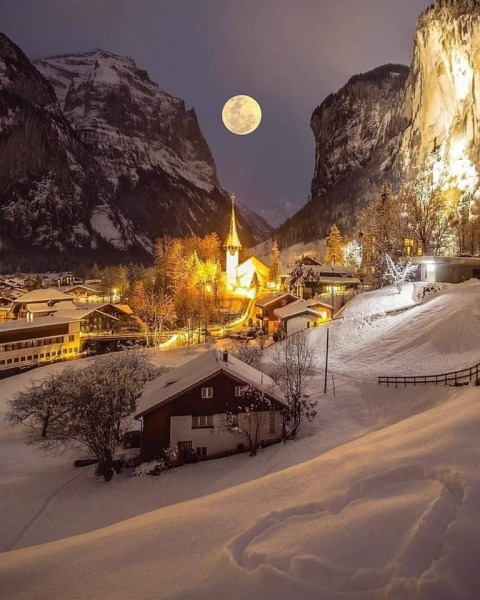
Hello everyone. Well we are into 2026. And it’s not without big events. I hope everyone is able to ground in the moment. Here is some info to read about the moon. When is the Next Full Moon? The Full Snow Moon, will occur on Sunday, February 1, 2026 The brilliant Snow Moon will be at its fullest at 5:09 EST, giving a great view right around sunset as it makes a gradual ascent in the Eastern sky. For those who are eager to see a full moon in all its glory, this could be one of the best opportunities to see one all year. When to see Snow Moon Gaze eastward at sunset on Feb. 1 to witness the full Snow Moon slip over the horizon, close to the stars of the constellation Cancer, the Crab. It will appear particularly large while close to the skyline thanks to a phenomenon known as the "moon illusion", which tricks our brains into thinking that the lunar disk is larger when close to foreground objects, even though its angular size remains unchanged. Earth's atmosphere can also tint the Snow Moon a yellow or orange hue, as shorter blue wavelengths of light reflected from its surface are scattered during its prolonged journey through Earth's atmosphere. Why it’s called the Snow Moon February's full moon is also known as the Snow Moon, in reference to the abundance of snow that falls in the mid-winter month. It has also been called the "Hungry Moon" to reflect the lack of food available in the winter months and also as the "Bear Moon" by some Indigenous North American tribes to mark the period when bear cubs are born. It's also sometimes known as the "Storm Moon" for the tumultuous weather that occasionally grips the Northern Hemisphere in the month of February. What else to see in sky with full moon Around this time, you may notice Jupiter appearing as a brilliant "evening star" high above the eastern horizon, with the bright stars Castor and Pollux of the constellation Gemini shining to its left. Jupiter will make for a brilliant stargazing target in early February, less than a month after reaching opposition on Jan. 10, when it sat opposite the sun in Earth's sky, heralding its brightest appearance in 2026. The familiar stars of the constellation Orion, the Hunter, will be visible twinkling to the right of Jupiter on the night of Feb. 1, with the light of the red giant star Aldebaran, which represents one of the eyes of the great bull represented in the constellation Taurus, winking above. Regulus — which represents the heart of the lion in the constellation Leo — can be found shining a little over 10 degrees to the lower left of the lunar disk as it rises higher in the winter sky. On the following night (Feb. 2), the moon will pass directly in front of Regulus, occulting the star for observers across parts of North America and Africa, according to In-the-Sky.org. Meanwhile, Saturn will be visible as a bright point of light shining above the western horizon at sunset on Feb. 1, close to the stars of the constellation Pisces, though the ringed planet will set swiftly out of view less than four hours after sundown. The Snow Moon's Company This year’s Snow Moon will rise high in the night sky on February 1, and as it does, it’ll be joined by some stellar company; Regulus, the brightest star in the constellation Leo, will rise in the eastern sky soon after the full moon. Following in the moon’s wake, Regulus will slide up to the left of the Snow Moon by midnight, according to EarthSky. Regulus won’t be the only night sky object accompanying the Snow Moon, which will also be visible as a full moon in the evenings immediately before and after February 1. In the wee hours of Jan. 31, 2026, the moon will appear right above Jupiter and form a triangle with nearby Castor and Pollux, the twin stars of the constellation Gemini. However, per BBC's Sky at Night Magazine, you’ll need to get up a few hours before sunrise if you want to see this happen in the morning sky. High in the Sky Like other full moons during winter months, the Snow Moon will be particularly bright and clear to see for a few reasons. One is that in winter months, the Northern Hemisphere is tilted away from the Sun, making a full moon appear higher in the sky than it would be during summer — the highest point of a full moon in the sky is during the winter solstice (December 21 or 22), when the Northern Hemisphere is tilted farthest from the Sun, according to Sky Lights. In the Northern Hemisphere, full moons also usually appear brighter during winter months because of all the snow covering the ground. The Moon doesn't actually glow; moonlight is just sunlight that reflects off the Moon and reaches Earth. And per NASA, since snow reflects most of the light that hits it, winter nights with full moons may look a little brighter when snow is on the ground. After February's Snow Moon, the next full moon to look forward to is the Worm Moon on March 3, 2026; in an exciting twist, a total lunar eclipse will occur during the Worm Moon's appearance, causing it to briefly turn into a deep crimson "blood moon." If dosing WPS… If you are thinking of using the split dosing approach for your WPS, here are the basic instructions: For three days before and three days after the full moon peak, you divide your WPS dose in thirds. Regarding whatever drop count you are at, at this time, take drops at 10:30 am, drops at 3:30 pm, and drops at bedtime as usual. You have to be extremely careful to allow the full two hours between your WPS and your other protocol supplements. You need to be precise with your timing, and return immediately to your regular dosing, after the six-day cycle of the full moon (three days before and the three days after). Someone with a scientific background could explain why this works in detail, but basically it seems that by splitting the WPS, you are interrupting the reproduction cycle of the organism which is accelerated during the full moon phase. In peace and health, Jen | |||
2026 © All Rights Reserved.