Click here to help toxic disease sufferers
How I Cured Morgellons
|
|
|
|
|
|
Jen 1/6/2026 12:12:43 AM MST |
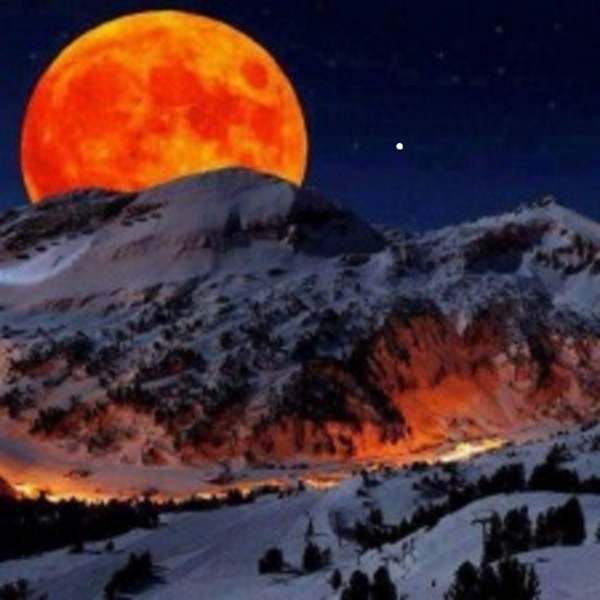
Hello everyone, This month isn’t just another full moon. Read on to find out about meteor showers, solar eclipse and new moon. Lots to start another calendar year. Happy New Year! In 2026, there will be 13 full moons. The first full moon of 2026 will be on Saturday, January 3, 2026. January 3 – Super Wolf Moon The full moon in January will be on Saturday, January 3, 2026 at 5:03 A.M. The Super Wolf Moon will be the first full moon of Winter. The January Full Moon will be the full moon in Cancer. The December 2025 full moon will be before the Winter Solstice. The January 2026 Full Moon will be the first full moon after the 2025 Winter Solstice. When to See January’s Full Moon January’s Full Wolf Moon reaches peak illumination on Saturday, January 3, 2026, at 5:03 A.M. EST. Because it is a Supermoon—occurring when the Moon is at perigee, its closest point to Earth—it will appear noticeably larger and brighter than a typical full Moon. At a Full Moon, the Moon is located on the opposite side of the Earth to the Sun, so the face of the Moon facing towards the Earth will be entirely illuminated by the Sun’s rays. Look for the January Moon to rise from the eastern horizon around sunset that evening. By midnight, the Wolf Moon glows bright and round overhead. By sunrise, it will disappear into the western horizon. And there’s more… In addition to the full moon on Jan. 3, Earth will also be in perihelion, meaning our orbit will be closest to the sun. The first major meteor shower of the year will also peak on Saturday, Jan. 3. The Quadrantid meteor shower this year will likely be hard to see with the full Wolf Moon glowing in the sky, but you might be lucky enough to catch a few of the meteors if you block the moon's light. The Wolf Moon It’s thought that January’s Full Moon came to be known as the Wolf Moon because wolves were more likely to be heard howling at this time. It was traditionally believed that wolves howled due to hunger during winter, but we know today that isn’t accurate. Howling and other wolf vocalizations are heard in the wintertime to locate pack members, reinforce social bonds, define territory, and coordinate hunting. More activity in January Just a week later, on Jan. 10, Jupiter, which will be clearly visible in the night sky for most of the month, will be at opposition. According to The Planetary Society, when Jupiter is in opposition, it means that the planet will be on the opposite side of Earth from the sun. Earth will fly between the sun and Jupiter on that day, EarthSky.org reported. The last skywatching event of the month is the new moon, which will occur on Jan. 18. After that, the next thing to look forward to in the sky will come in February. There's a partial solar eclipse that will take place on Feb. 17. Moon Folklore A bright first Moon promises rain and a bountiful harvest; a red-tinted Moon means a dry year. A growing Moon and a flowing tide are lucky times to marry. A halo around the Moon predicts wet or stormy weather. Lovely poem The sunset embers smolder low, The Moon climbs o’er the hill, The peaks have caught the alpenglow, The robin’s song is still. –John L. Stoddard (1850–1931) If dosing WPS… If you are thinking of using the split dosing approach for your WPS, here are the basic instructions: For three days before and three days after the full moon peak, you divide your WPS dose in thirds. Regarding whatever drop count you are at, at this time, take drops at 10:30 am, drops at 3:30 pm, and drops at bedtime as usual. You have to be extremely careful to allow the full two hours between your WPS and your other protocol supplements. You need to be precise with your timing, and return immediately to your regular dosing, after the six-day cycle of the full moon (three days before and the three days after). Someone with a scientific background could explain why this works in detail, but basically it seems that by splitting the WPS, you are interrupting the reproduction cycle of the organism which is accelerated during the full moon phase. In peace and health, Jen | |||
2026 © All Rights Reserved.