
Click here to help toxic disease sufferers
How I Cured Morgellons
|
|
|
|
|
 | |
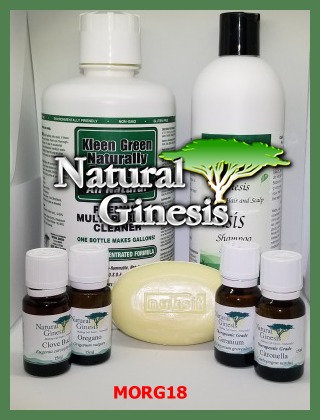
12/12/2012 10:20:04 AM | Hi Nancy, Excellent question and a very legitimate concern given that so many in the Morgellons community are dealing with fungal overgrowth issues. One might ask "Why use plant or fungal based enzymes in the first place when animal sourced enzymes are so effective?" The answer is that they are active across a much broader pH range, they are more temperature stable, and they are often equally effective at lower dosages. They are also more cost effective to produce on a large scale, which makes them more suitable for industrial applications, i.e. cleaners like Kleen Green. Supplemental plant based enzymes may be produced in manufacturing from fungal or bacterial sources. The living source produces the wanted enzyme under specific conditions and the two are then separated and filtered away from each other. When proper quality control procedures are followed, the final enzyme has no trace of the original organism that produced it. As a manufacturer of custom blended supplements (including fungal derived enzymes), Logos goes to great lengths to ensure the purity and potency of every raw ingredient we use. Upon arrival at our manufacturing facility, every raw material is quarantined and tested for purity, potency and microbial contamination. Contaminated raw materials (which are detected on rare occasion) are returned to their supplier. Our quality control process dictates that products are tested twice more: once during production and again as finished products. As a very satisfied personal customer of Natural Ginesis and Kleen Green, I am confident of the company's equal commitment to quality control. I have found the product to be invaluable as a nontoxic household cleaner, insecticide and deodorizer (it totally eradicates dog smell on contact). I would also add that Kleen Green is not expensive if used properly. It is highly concentrated and very powerful, so a little goes a long way. It should be diluted in a 1:7 ratio with water for normal cleaning and for skin applications. By the way, prolonged or repeated exposures to industrial strength enzymes is not necessary and is not recommended as allergic reactions can develop. Like everything else, too much of a good thing is usually not good. Thanks again Nancy for your great question. Peace and Blessings and a very Merry Christmas, John |
|
2026 © All Rights Reserved.