
Click here to help toxic disease sufferers
How I Cured Morgellons
|
|
|
|
|
 | |||||||
9/25/2023 10:01:42 AM |
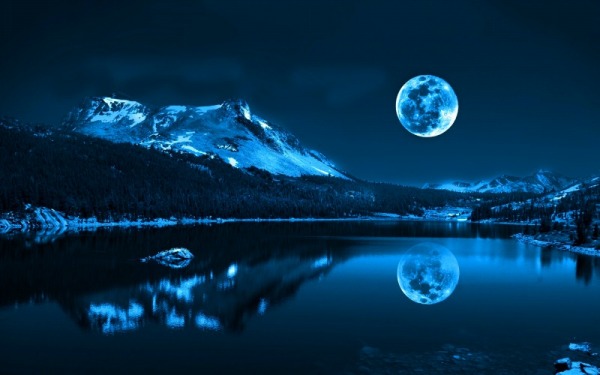
The next full moon will be this Friday September 29th,2023 If you are thinking of using the split dosing approach for your WPS, here are the basic instructions: For three days before and after the full moon peak, you divide your WPS dose in thirds. Regarding whatever drop count you are at, at this time, take drops at 10:30 am, drops at 3:30 pm, and drops at bedtime as usual. You have to be extremely careful to allow the full two hours between your WPS and your other protocol supplements. You need to be precise with your timing, and return immediately to your regular dosing, after the six-day cycle of the full moon (three days before and the three days after). Someone with a scientific background could explain why this works in detail, but basically it seems that by splitting the WPS, you are interrupting the reproduction cycle of the organism which is accelerated during the full moon phase. The full moon of September, called the Harvest Moon, will grace the skies Sept. 29, just two days after it reaches perigee, its closest point in its orbit to Earth. The moon becomes officially full for New York City observers on Sept. 29 at 4:47 a.m. Eastern Daylight Time (0957 UT), according to the U.S. Naval Observatory. As it is a bit closer than usual it is also a "supermoon" – a full moon that will appear slightly larger than normal. The moon will be in the constellation Pisces, and rises the evening of Sept. 28 at 6:35 p.m.; sunset that day is at 6:43 p.m. Moonset is at 6:54 a.m. Eastern Time on Sept. 29, per the USNO). A full moon is when the Moon is exactly on the opposite side of the Earth from the Sun. The time between full moons is about 29.5 days, though the time for the moon to complete one orbit is a bit shorter, 27.3 days; the former is called the synodic period and the latter is called the sidereal period. The difference is because after the moon completes a circuit around the Earth, the Earth itself has moved in its orbit around the sun, so to reach a point exactly opposite the sun the moon has to move a bit further. The timing of lunar phases depends on where the moon is relative to the Earth rather than where one is located on the planet, so the hour of the full moon depends entirely on one's time zone. While the full moon occurs in the predawn hours in Eastern North America and central South America, for example, if one goes to Europe it happens in the morning (9:57 a.m. in London, 10:57 a.m. in Paris). In Asia and Oceania the full moon happens in the evening – 6:57 p.m. local time in Tokyo and 7:57 p.m. local time in Melbourne, Australia. A supermoon isn't a true astronomical term; it just refers to when the moon is at its closest point to Earth within a couple of days of being full, in this case the moon reaches perigee on Sept. 27 at 8:58 p.m. Eastern Time. Supermoons happen because the lunar orbit is not a perfect circle; it is an ellipse, though one that is only very slightly so. At its closest point, called perigee, the moon is 226,000 miles (363,300 kilometers), and at its farthest it is 253,000 miles (405,000 kilometers). The difference isn't all that much, a typical "supermoon" will appear about 10 to 11 percent larger than an ordinary full moon; but that difference is almost impossible to see unless one is very observant and tracking full moons for many months. | ||||||
| |||||||
2026 © All Rights Reserved.