Click here to help toxic disease sufferers
How I Cured Morgellons
|
|
|
|
|
 | ||||
6/25/2025 9:10:49 AM |
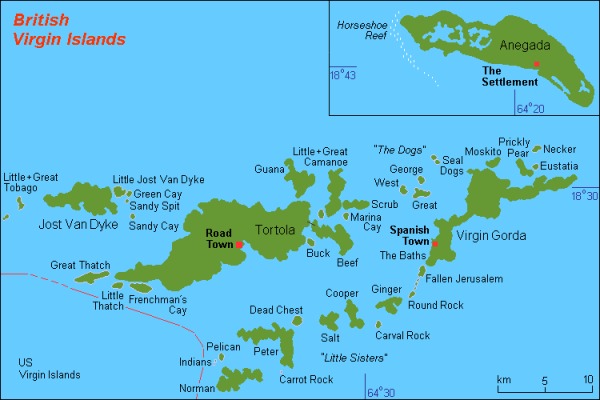
A new country showed up the other day…British Virgin Islands (BVI). See below for snapshot of the history. Always starts with discovery by some quiet person(s) living life. See below as introduction to BVI. The following is taken from Wikipedia. British Virgin Islands (BVI),[3] officially the Virgin Islands,[4] are a British Overseas Territory in the Caribbean, to the east of Puerto Rico and the US Virgin Islands and north-west of Anguilla. The islands are geographically part of the Virgin Islands archipelago and are located in the Leeward Islands of the Lesser Antilles and part of the West Indies. The British Virgin Islands consist of the main islands of Tortola, Virgin Gorda, Anegada and Jost Van Dyke, along with more than 50 other smaller islands and cays. About 16 of the islands are inhabited.[3] The capital, Road Town, is on Tortola, the largest island, which is about 20 km (12 mi) long and 5 km (3 mi) wide. The islands had a population of 28,054 at the 2010 Census, of whom 23,491 lived on Tortola;[1] current estimates put the population at 35,802 (July 2018). The economy of the territory is overwhelmingly dominated by tourism and financial services. In terms of financial services, the territory is known as a leading hub for tax evasion and concealment of assets. British Virgin Islanders are British Overseas Territories citizens and, since 2002, also British citizens. Etymology The islands were named "Santa Úrsula y las Once Mil Vírgenes" by Christopher Columbus in 1493 after the legend of Saint Ursula and the 11,000 virgins.[3][5] The name was later shortened to "the Virgin Islands". The official name of the territory is still simply the "Virgin Islands", but the prefix "British" is often used. This is commonly believed to distinguish it from the neighbouring American territory which changed its name from the "Danish West Indies" to "Virgin Islands of the United States" in 1917. In 1968 the British Government issued a memorandum requiring that the postage stamps in the territory should say "British Virgin Islands" (whereas previously they had simply stated "Virgin Islands"), a practice which is still followed today. This was likely to prevent confusion following on from the adoption of US currency in the territory in 1959, and the references to US currency on the stamps of the territory. History It is generally thought that the Virgin Islands were first settled by the Arawak from South America around 100 BC to AD 200, though there is some evidence of Amerindian presence on the islands as far back as 1500 BC. The Arawaks inhabited the islands until the 15th century when they were displaced by the Kalinago (Island Caribs), a tribe from the Lesser Antilles islands. The first European sighting of the Virgin Islands was by the Spanish expedition of Christopher Columbus in 1493 on his second voyage to the Americas, who gave the islands their modern name. The Spanish Empire claimed the islands by discovery in the early 16th century, but never settled them, and subsequent years saw the English, Dutch, French, Spanish, and Danish all jostling for control of the region, which became a notorious haunt for pirates. The Dutch established a permanent settlement on the island of Tortola by 1648, frequently clashing with the Spanish who were based on nearby Puerto Rico. In 1672, the English captured Tortola from the Dutch, and the English annexation of Anegada and Virgin Gorda followed in 1680. Meanwhile, over the period 1672–1733, the Danish gained control of the nearby islands of Saint Thomas, Saint John and Saint Croix (i.e. the modern US Virgin Islands). The British islands were considered principally a strategic possession. The British introduced sugar cane which was to become the main crop and source of foreign trade, and large numbers of slaves were forcibly brought from Africa to work on the sugar cane plantations. In 1917, the United States purchased the Danish Virgin Islands for US$25 million, renaming them the United States Virgin Islands. Economic linkages with the US islands prompted the British Virgin Islands to adopt the US dollar as its currency in 1959. The British Virgin Islands were administered variously as part of the British Leeward Islands or with St. Kitts and Nevis, with an administrator representing the British Government on the islands. The islands gained separate colony status in 1960 and became autonomous in 1967 under the new post of Chief Minister. Since the 1960s, the islands have diversified away from their traditionally agriculture-based economy towards tourism and financial services, becoming one of the wealthiest areas in the Caribbean. In 2017 Hurricane Irma struck the islands, causing four deaths and immense damage. Geography The British Virgin Islands comprise around 60 tropical Caribbean islands, ranging in size from the largest, Tortola, being 20 km (12 mi) long and 5 km (3 mi) wide, to tiny uninhabited islets, altogether about 150 square kilometres (58 square miles) in extent. Most of the islands are volcanic in origin and have a hilly, rugged terrain. The highest point is Mount Sage on Tortola at 521m. Anegada is geologically distinct from the rest of the group, being a flat island composed of limestone and coral. Climate The British Virgin Islands have a tropical rainforest climate, moderated by trade winds.[5] Temperatures vary little throughout the year. In the capital, Road Town, typical daily maxima are around 32 °C (89.6 °F) in the summer and 29 °C (84.2 °F) in the winter. Typical daily minima are around 26 °C (78.8 °F) in the summer and 23 °C (73.4 °F) in the winter. Rainfall averages about 1,150 mm (45.3 in) per year, higher in the hills and lower on the coast. Rainfall can be quite variable, but the wettest months on average are September to November and the driest months on average are February and March. Politics The territory operates as a parliamentary democracy. Ultimate executive authority in the British Virgin Islands is vested in the King, and is exercised on his behalf by the Governor of the British Virgin Islands.[3] The governor is appointed by the King on the advice of the British Government. Defence and most foreign affairs remain the responsibility of the United Kingdom. Economy The twin pillars of the economy are financial services (60%) and tourism (roughly 40–45% of GDP). Economically however, financial services associated with the territory's status as an offshore financial centre are by far the more important.[2] 51.8% of the Government's revenue comes directly from licence fees for offshore companies, and considerable further sums are raised directly or indirectly from payroll taxes relating to salaries paid within the trust industry sector (which tend to be higher on average than those paid in the tourism sector). Well, another great history lesson. Juxtaposition between the beautiful waters and reefs. Then the battles for power again among foreign territories. Keep the romantic memories for anyone whose visited. Many blessings, Jen 1) Albania 2) Afghanistan 3) Algeria 4) Anguilla 5) Argentina 6) Armenia 7) Australia 8) Austria 9) Azerbaijan 10) Bahrain 11) Bahamas 12) Bangladesh 13) Barbados 14) Barbuda 15) Belarus 16) Belgium 17) Benin, Republic of 18) Bermuda 19) Bolivia 20) Bosnia and Herzegovina 21) Botswana 22) Brazil 23) British Virgin Islands 24) Bulgaria 25) Cambodia 26) Canada 27) Cayman Islands 28) Chili 29) China 30) Colombia 31) Congo Democratic Republic of 32) Costa Rica 33) Côte d'Ivoire 34) Croatia 35) Curacao 36) Cyprus 37) Czech Republic 38) Czechia 39) Denmark 40) Dominican Republic 41) Ecuador 42) Egypt 43) England 44) Estonia 45) Ethiopia 46) Finland 47) France 48) Georgia 49) Germany 50) Ghana 51) Greece 52) Greenland 53) Guam 54) Honduras 55) Hong Kong 56) Hungary 57) Iceland 58) India 59) Indonesia 60) Iran, Islamic Republic of 61) Ireland 62) Isle of Man 63) Israel 64) Italy 65) Jamaica 66) Japan 67) Jordan 68) Kazakhstan 69) Korea 70) Kuwait 71) Latvia 72) Lebanon 73) Liechtenstein 74) Lithuania 75) Laos People's Democratic Republic 76) Luxembourg 77) Macedonia 78) Malaysia 79) Malta 80) Mexico 81) Moldova, Republic of 82) Monaco 83) Morocco 84) Mozambique 85) Mauritius 86) Nicaragua 87) Nepal 88) Netherlands 89) New Zealand 90) Nigeria 91) Northern Ireland 92) North Macedonia, United Kingdom of 93) Norway 94) Other unidentified country 95) Pakistan 96) Panama 97) Paraguay 98) Peru 99) Philippines 100) Poland 101) Portugal 102) Puerto Rico 103) Qatar 104) Romania 105) Russian Federation 106) Saudi Arabia 107) Scotland 108) Serbia 109) Seychelles 110) Singapore 111) Slovakia 112) Slovenia 113) Somalia 114) South Africa 115) Spain 116) Suriname 117) Sweden 118) Switzerland 119) Taiwan 120) Thailand 121) Trinidad and Tobago 122) Turkey 123) Ukraine 124) Uzbekistan 125) United Arab Emirates 126) United States 127) Venezuela (Democratic Republic of) 128) Vietnam 129) Wales 130) Zambia 131) Zimbabwe | |||
|
2026 © All Rights Reserved.